

Barnes & Noble’s Turnaround (Or There’s No Competition for a Good Bookstore)
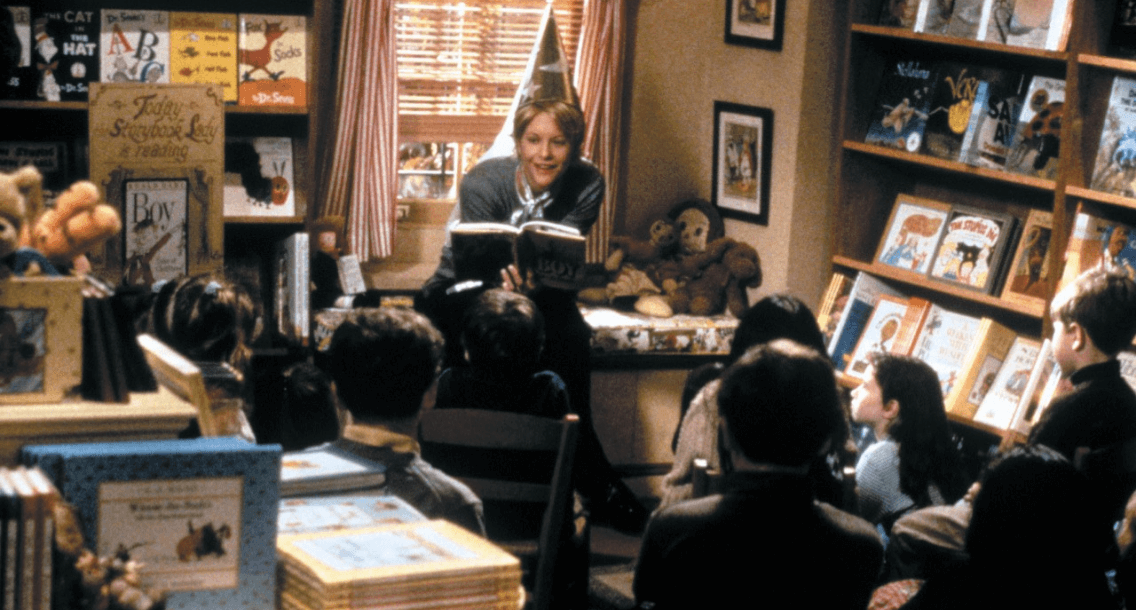
“You’ve Got Mail” is forever linked to the 1990s, thanks to its AOL-inspired title and its storyline: An owner of a big-box bookstore chain unknowingly falls for a business rival, the proprietor of a charming, independent children’s bookstore. Since then, big chain bookstores have themselves suffered at the hands of the omnipresent Amazon. But now, there are glimmers of hope. The venerable brick-and-mortar chain Barnes & Noble is finally seeing a turnaround, and there’s a lesson in this for entrepreneurs everywhere.
Carey Smith | Founding Contrarian
The news that Barnes & Noble plans to open 30 stores in 2023 has a lot of people celebrating. It’s a little like discovering the year’s first snowdrops blooming — an indication that the world is tilting in the right direction.
For a while, it looked like Barnes & Noble might go under, like Borders, Crown Books and Waldenbooks. Customers were lured into online shopping by its ease and convenience, and B&N was forced to shutter locations as it desperately tried to keep up with the competition by selling online and venturing into e-readers. But worrying about what the competition is doing is a loser’s game. Nobody ever got ahead by doing it. Barnes & Noble certainly didn’t. By 2018, it was reporting a $126 million loss.
But then, good things started happening. A new CEO known for his success turning around a British bookseller brought fresh eyes to the company’s predicament, and asked its employees to be involved in stocking decisions, because every city is different. The focus was put back on the customer, not the online competition. And with that, the company’s fortunes began to improve.
Long before I started Unorthodox Ventures, I remember talking to a fellow who owned a hardware store in Indianapolis. He was fixated on what stores like Lowe’s were charging for a pound of tenpenny nails. He was so concerned about literally changing his prices to meet or beat the competition’s that he had no time left to build his own brand. I told him he should focus on his strengths: a downtown location and individualized service, and offer customers special tools or services that no big-box store could match. Put the energy you’re wasting on worrying to much better use by differentiating your business. Look ahead, not behind you, I urged him. I hope he did.
Many founders we work with seem unable to take their eyes off the rearview mirror. They’re fixated on the competition because they think they’ll lose out if they don’t, but the opposite is true. Instead, they need to concentrate on what they do best and build customer loyalty by providing exemplary service.
As far as Barnes & Noble is concerned, not only does it have its priorities straight, but people are waking up to the fact that although convenient, online shopping can’t compete with the joy of discovering new books in a relaxed and comfortable setting. Good brick-and-mortar bookstores provide an opportunity to connect with books — and with people — and that can’t be beat.
More good news? The inspiration for the charming, independent bookstore in You’ve Got Mail is still going strong in lower Manhattan more than 25 years later, doing what it does best. Books of Wonder. Look it up if you’re ever in the neighborhood.