

Rations Back in Fashion and a Lunar Dust-up (Or the Unintended Consequences Edition)
People in power make decisions all the time that leave me scratching my head (and that’s putting it diplomatically). Their actions can have unintended consequences that range from annoyance to, well, death.
Carey Smith | Founding Contrarian
Don’t mistake this missive for just bemoaning “bureaucrats these days” and their boneheaded decisions — quite the contrary. It’s been this way my entire adult life. It can happen in business, too, but that’s a topic for another day. For now, enjoy this history lesson on the unforeseen, underestimated and unplanned, from the 1940s to today, in three headlines.
Meat(less) Market
The Times reports that researchers in England suggest a revival of World War II-style rationing could help stave off global warming by limiting our purchases of airline flights, gas and even meat. They suggest we all carry around “carbon cards” in our wallets that track our “carbon allowance” — a modern-day version of the booklets of ration stamps that set limits on what World War II-era shoppers could buy to conserve as many resources as possible for the war. First tires were rationed, then cars and gasoline. In a matter of months, people had to produce ration stamps along with cash to pay for everything from sugar and coffee to meats and cheese. Want to buy a pound of bacon? Beyond the 30 cents, you had to fork over seven ration points. How was the system policed? A bureaucracy, of course. More than 100,000 Americans volunteered to administer the program through nearly 6,000 local rationing boards.
It’s clear these climate-focused researchers and advocates are insane, and they’re getting more and more insane in pursuit of misguided environmentalism. It reminds me of the 1970s oil crisis, when, rather than let the market set the price of fuel, our government overlords decided we could only fill our tanks on odd- or even-numbered days, depending on our license plate numbers. Instead of voluntarily driving less or carpooling due to the higher market price of fuel, frustrated Americans sat in gas station lines that wrapped around entire city blocks. What a solution! And here we go again.
Sweater Weather
Heat pumps outsold gas furnaces for the first time last year. The New York Times tells us that experts and “electrification advocates” (whatever that means) say they heat just as well as gas furnaces. Sure they do … if you live in Florida or Texas. But if you dwell anywhere farther north, I hope you have a stack of sweaters in your closet, because heat pumps pull heat indoors from the outside, and there’s not a heck of a lot of heat to harvest in the middle of a Vermont winter. A heat pump’s efficiency declines when temperatures dip below the mid-40s, along with your comfort. But politicians have glommed onto them in the race to power everything with electricity instead of other available types of energy, including natural gas, which America has in abundance.
The great heat pump debate is like the rise of diesel in Europe all over again. Beginning in the 1990s, European leaders pushed diesel as a more efficient fuel source, and ownership skyrocketed. But it turns out there was a wee flaw in their logic — actually, multiple flaws. If you live on this planet and are over the age of 6, you know that diesel cars and trucks produce a lot of soot. That soot is filled with toxic air pollutants, worsening the climate issues they intended to solve. In the end, the great gospel of diesel really didn’t do much of anything to slow global warming, and in fact, it made things worse in unexpected ways.
Space Oddity
Now we’ve arrived at the batshit craziest idea of all, and this one sits squarely in our modern era. The Washington Post reports that scientists are discussing blasting lunar dust into space to shield the Earth from the sun in an effort to ease global warming. If it sounds wild, it is. One giant leap into the deep end for mankind, if you ask me.
It reminds me of my time in an idyllic little Wisconsin town until the state government’s natural resources crowd decided there were too many carp and not enough game fish in the area’s charming Lake Sinissippi. So they decided to drain it and restock, but the process took forever. Without fish, the marsh grass grew and grew, while the hungry birds went elsewhere. The state may have gotten rid of the trash fish, but they totally trashed the lake in the process. You couldn’t even get a canoe through it. The state then announced a plan to fix the issues, but the town’s angry residents filled the local high school gym and screamed at the bureaucrats during a public meeting, pleading for them to just leave it alone for fear they would cause even more damage.
But surely the space cadets are right about the moon dust, and there won’t be any drawbacks to artificially altering our planet’s exposure to sunlight.
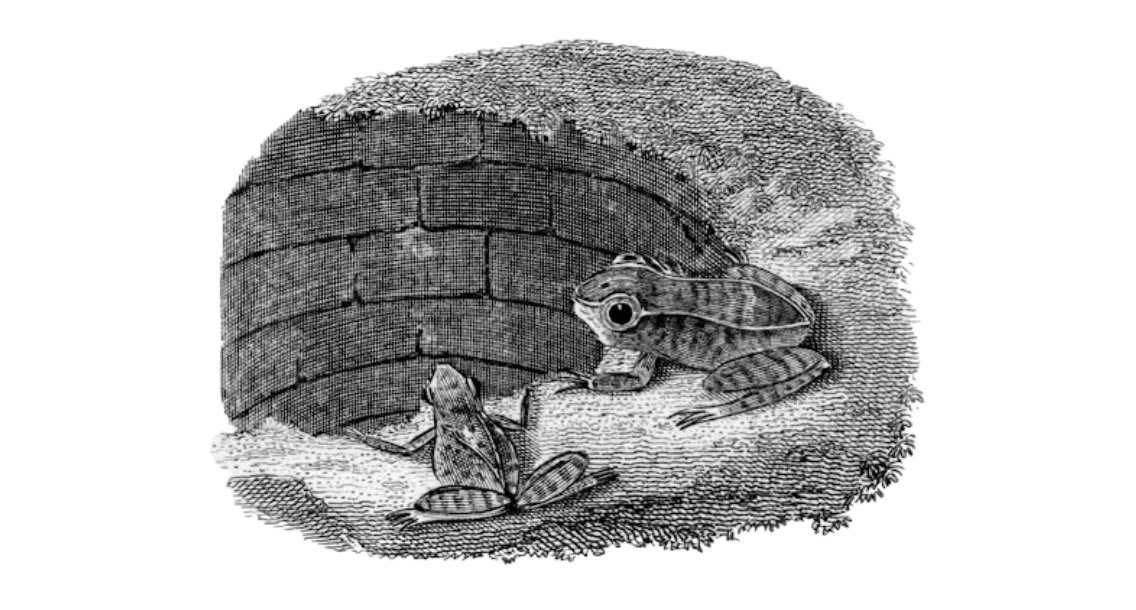
These tales are just the latest in one as old as Aesop’s fable of the two frogs who left their dry pond for a well. One decided to live there, while the other wisely worried about how to get out. If only people would think of the consequences of their decisions.