

There’s No Business Like Shoe Business (Or A Brand Spanking)
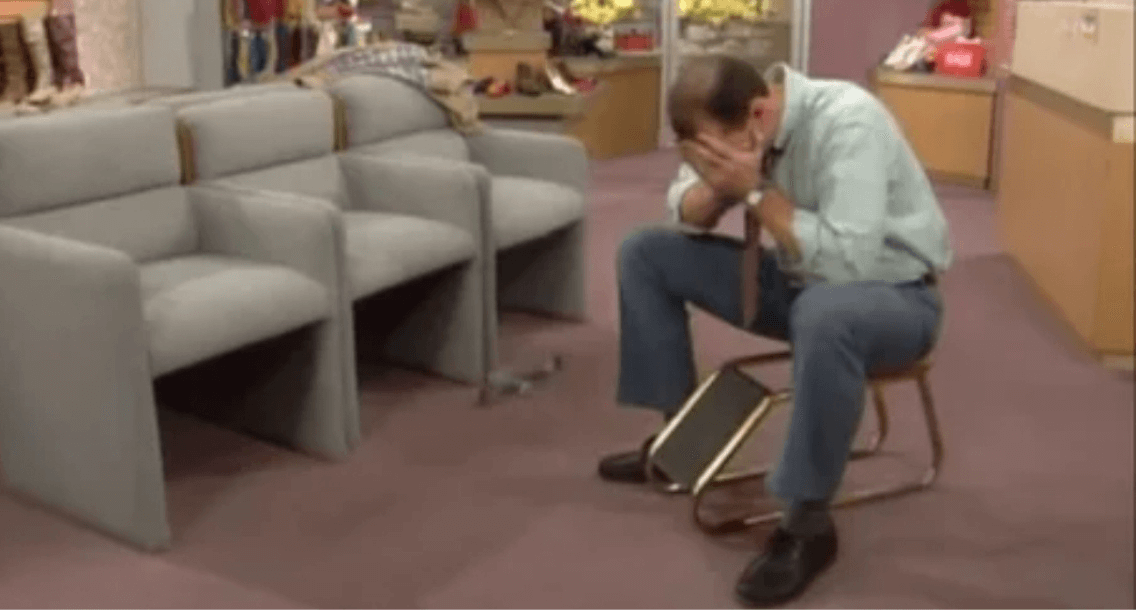
Poor Al Bundy. In the classic TV series “Married… with Children,” the beleaguered dad works at a women’s shoe store where there’s no such thing as an easy sale. Customers either insist their feet are smaller than the measuring device shows or demand to see pair after pair until Al threatens to strangle them. These days, they would probably just order multiple pairs online, but that doesn’t mean the shoe business has gotten any easier, as sustainable shoe seller Allbirds discovered. But Allbirds’ failed attempts to build on early success provide useful lessons for all founders.
Carey Smith | Founding Contrarian
The Wall Street Journal’s in-depth article about Allbirds, the once red-hot shoe company that lost its footing, got me reminiscing about my old high-school job at a Thom McAn’s shoe store. I learned a lot there about business — and saw that the footwear industry faces huge challenges, from changing styles and a fickle public to stiff competition. But working at a store that sold knockoffs of popular shoes — giving them names like Jox and Exersole — also helped teach me the value of a strong brand. The fact that Thom McAn’s decline commenced with the rise of Nike was no coincidence.
The decades since have only reinforced the belief that brand is everything. At the fan company, we nurtured our reputation for quality, reliability and service as if our livelihoods depended on it, because they did. Sure, we had a great name, logo and even color scheme, but that’s not your brand, despite what branding agencies want you to believe. We knew that our brand rested on our reputation — and that brand loyalty is the key to success.
When you’ve got a strong brand, as it seems Allbirds did, then you need to do everything in your power to protect it.
So how did they blow it — and manage to lose more than 95% of their market value in less than two years? By making virtually every mistake we warn against when founders visit our office.
To start with, that old saw about two heads being better than one? Fugetaboutit. It does not apply to CEOs, and whenever co-CEOs stumble into our office, we tell them they need to rethink their management structure. Allbirds took too long before reaching that conclusion, to their detriment, as the company’s co-CEOs repeatedly sent mixed messages to employees, effectively pulling the company in different directions.
And the company didn’t seem to know customers’ purchasing priorities, banking on them being willing, even eager, to pay extra for sustainable materials. Now they’ve learned the hard way that they can’t take that to the bank. Did customers really demand sustainable materials, or did they just want comfortable, supportive shoes?
Allbirds also didn’t test those sustainable materials adequately, which led to quality complaints as shoes quickly developed holes. That was inevitable, given the fact that their products were manufactured in Asia, where quality is rarely a priority and the turnaround time to correct defects — much less complete product design cycles — is painfully slow compared to manufacturing domestically. That’s why we always strongly encourage founders to manufacture close to home.
Then when they tried to diversify, they went in a million directions at once, more proof they didn’t understand what their customers actually wanted. Leggings! Dresses! Puffy jackets! Shoes for every occasion, even golf! Their attempt at “entry-level” running shoes fell flat — Nike still dominates — as did their other new products. Reminds me of how Thom McAn in its waning years failed when opening stores under the name Chess King to sell clothes and anything else they thought could turn around the company. In Allbirds’ attempts to appeal to a wider customer base, not only did they alienate their original fans, they essentially took a sledgehammer to their brand.
Is the damage irreparable? Time will tell. The company is in the process of getting back to basics. They’ve eliminated one big problem by cutting their number of CEOs down to one. They’ve also eliminated many of those new products and gained valuable insight into the longevity of their “sustainable” materials. Maybe they can get back on track, especially if they keep talking to customers. It’s just too bad they didn’t do that much earlier, because a brand, to paraphrase an old ad, is a terrible thing to waste.