

Who’s Really Guilty in This? [Or Tales from the Crypt(ocurrency)]
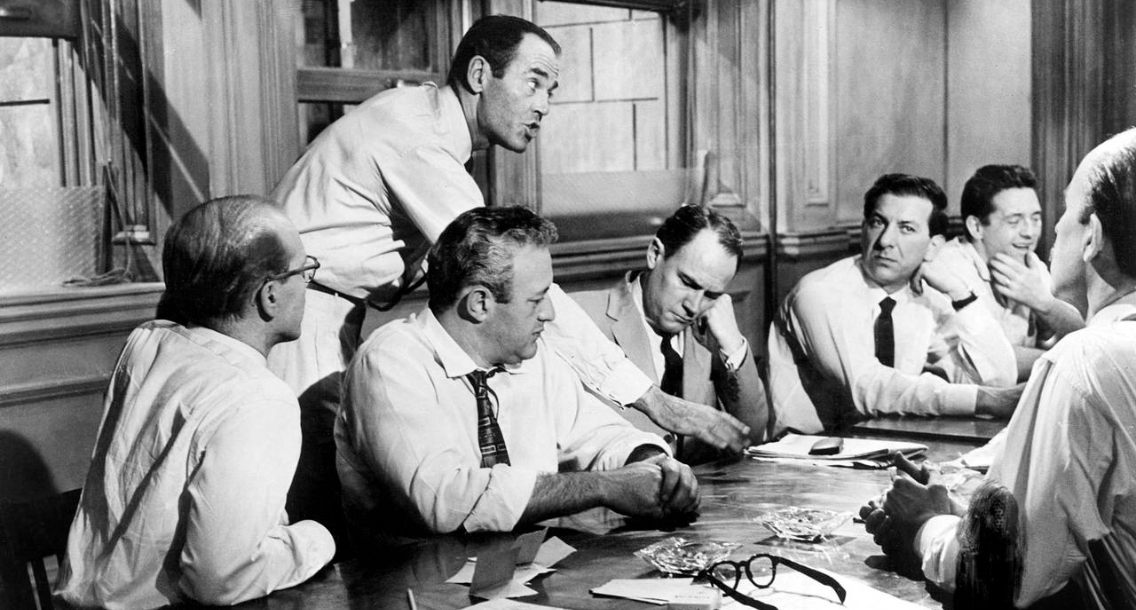
The 1957 jury-room classic 12 Angry Men was remade in 1997, but it might be time for a new production, if only to remind us of one of the film’s most powerful messages: That “groupthink” is dangerous, and following the crowd can be the worst direction to go.
Carey Smith | Founding Contrarian
In the last decade, we’ve seen one wild-eyed entrepreneur after another rise to great heights, only to fall from grace in spectacular fashion when their outrageous behavior comes to light. Meanwhile, those largely responsible for the behavior are let off scot-free to continue their risky business habits.
Don’t get me wrong: FTX’s SBF (Sam Bankman-Fried), WeWork’s Adam Neumann, the recently sentenced Elizabeth Holmes and all the other wunderkinds deserved what they got. But they didn’t reach icon status on their own. “Look for the helpers,” Mister Rogers advised. In the world of high-flying entrepreneurial flim-flammers, “Look for the aiders and abetters” is appropriate.
Leading the list, of course, is the media, who continue to raise the crazies to the rafters in the hopes of reaping a few more clicks. But equally responsible are the financiers who seem incapable of resisting a socially awkward, frumpily attired entrepreneur with a plan to change the world. (Merely disrupting the status quo is so last decade!) The same usual suspects that eagerly endorsed the erstwhile king of crypto also bankrolled WeWork’s Neumann and other hustlers. The downfall of SBF once again showcases the recklessness of investors, who blithely overlook boring practicalities and a lack of details in their rush to embrace the latest phenom. Have they simply trained their brains not to see what’s before their eyes?
But sadly, this latest episode of Entrepreneurs Gone Wild also highlights the sheeplike willingness (no offense to sheep) of humans in general to mirror their peers’ thoughts and happily line up behind anyone who talks a good talk, especially when it comes cloaked in a worthy-sounding endeavor. And what could sound worthier than “effective altruism,” the notion that we should systematically focus our philanthropic efforts on doing the most good, not just in the present, but hundreds of years in the future? Who are they kidding?
When you’re the media, why ask for details, scrutinize books or question motives? Just look at the guy! He’s playing a video game while on an investor call. How cool is that! He dresses like a slob, and that’s how we dress while we work from home. He doesn’t take work seriously, and we don’t, either. Clearly he’s one of us…
And that’s the problem, because you don’t think in terms of “one of us” unless your goal is to conform to a group. And the drive to conform will surely put an end to us long before future generations can benefit from the long-term good supposedly being done for their sake.
Sociologist William Whyte coined the term “groupthink” in 1952. Writing in Fortune — the same magazine that just a few months ago put SBF on its cover beside the headline, “The Next Warren Buffett?” — Whyte offered this definition: “We are not talking about mere instinctive conformity … What we are talking about is a rationalized conformity — an open, articulate philosophy which holds that group values are not only expedient but right and good as well.”
A few years later, psychologist Irving Janis ran with the idea: “[Group] members’ striving for unanimity overrides their motivation to realistically appraise alternative courses of action. Groupthink refers to a deterioration of mental efficiency, reality testing and moral judgment that results from in-group pressures.”
It’s amazing what can be accomplished when a striving for unanimity is replaced by a striving to get to the truth. People ignore all sorts of warning signs. Consider the comments of the new CEO of FTX whose experience includes having overseen the liquidation of Enron following its downfall in the early 2000s. “Never in my career have I seen such a complete failure of corporate controls and such a complete absence of trustworthy financial information as occurred here,” John Ray III told a judge about FTX. Enron’s executives wound up in handcuffs. Bankman-Fried quickly found the same fate with those handcuffs complemented by a T-shirt and shorts rather than Armani suits.
The whole ordeal demonstrates the need to think independently and apply real due diligence to counter today’s prevailing FOMO-driven investing. In “12 Angry Men,” Henry Fonda was the lone holdout against the in-group pressure to convict, and in time, the jury agreed on acquittal. And in a rare turn of events, VC firms have apologized for the hundreds of millions lost on FTX, telling fund investors that in the future, they would improve their due-diligence process.
That might just make the world a better place, now and in the future.